Showing posts with label Renault. Show all posts
Showing posts with label Renault. Show all posts
Thursday, 28 March 2013
Monday, 25 March 2013
Interview with Laurens van den Acker
“In hindsight I wasn’t at all ready for it, I was naïve. In a way it was like trying to compose without knowing how to play the piano.”
This is how Renault’s head of design Laurens van den Acker looks back on his involvement in Bugatti’s EB110 supercar. After senior designers fell out he was left as the only interior designer, and none other than Marcello Gandini took care of the exterior. With Volvo trucks the only other work in his portfolio, the monstrous Bugatti wasn’t a bad way to start a career as a car designer.

Fast forward twenty-two years and after stints at Audi, Ford and most recently Mazda he finds himself with the mission of engaging Renault with buyers on an emotional level again whilst managing the façade of their electric aspirations. That’s a big ask right now.
Renault’s Technocentre on the outskirts of Paris is not what you’d expect. Its cold, stepped concrete mass is a strange bastardisation of the carefree cars Renault have traditionally made – cars like the 5 and 4CV – but it’s nevertheless home to the company’s main design studio and, for now at least, Acker.
After driving through the night and battling truly malevolent Parisian rush hour traffic, Laurens’ warm, Zen-like office deep inside the Renault’s technological fortress was the perfect tonic and good setting to discuss Renault’s bohemian concept cars, the future of their electric strategy and what Laurens himself thinks of cars.
GCD: Obviously when you moved from Mazda to Renault they needed a change, and you came up with a strategy around the cycle of life. Where did the spark come from?
Laurens van den Acker: When the [Renault] management attracted me, they asked me to open up a new chapter for the brand in terms of design and design strategy. That’s the main reason I came, because it’s not very often that a big car company wants to start a design strategy with a blank sheet of paper. So I think it was key for me to first find out what this company was about, and I think the most important point was a time when Renault were designing ‘cars for living’ – like the Espace and Twingo - and this was their philosophy in the middle of the nineties when Renault were extremely strong.
I think Renault has always been a human-centric brand – not geared towards performance like the Germans, not geared towards improving cars but with a bit of an anonymous shape like the Japanese brands – but really centred around humans. So, ‘Cycle of Life’ (below) became the logical way to create a connection with all the different clients. We’re a generalist brand so we make crossovers, we make commercial vehicles and so many different types of vehicle, so how could I make sense of it?
I said, ‘Renault makes cars to fall in love with - like the Alpine or the first Twingo - we make familiy cars like the Scenic, we make commercial vehicles, we do Renaultsport – fun vehicles – and then we do EVs [electric vehicles], which are vehicles for ‘wisdom’, so there is link between the stages of life and the vehicles we make. It was a nice way to tie it all together in a simple way.

The Life Cycle: Ideas and realisation (the Dezir was, unsurprisingly, Love)
GCD: And which stage of the seven means the most to you?
LvdA: I think for me what was key was to make people fall in love again with the Renault brand. That was the first job that I had, because people can fall out of love and I felt that people had fallen out of love with Renault. There’s a lot of sympathy for the brand, but to a certain degree we had disappointed our customers. So my biggest job was to make people fall in love again, and I think the Dezir showed ambition and it was the first test – could we excite people again?
GCD: You mentioned the Japanese makers, how does the ethos differ from design studios in the Far East to here in Europe?
LvdA: When you leave one country and go to the next you find out what you’re made of. When I left Holland to go to Italy I found out I was Dutch, and going from Europe to the [United] States I found out I was European. And when you go from the States to Japan you find out that you’re Western. So, it was fun for me to come back to France because it was like a culture shock in reverse.
I think that the biggest difference is that in Japan the company is most important, then the team and then you. In a Western society you are most important, then your favourite football club and your family, and then maybe the company. This is an individual society, and in Japan there is a strong sense of unity. That means that when you come into a design studio the advantage is that I felt like I’d come to Mazda and landed into a Formula One seat – because if you know where to go everybody will support you to get there. People will say ‘You’re the new chief, tell us where to go, but make sure that whatever you do helps Mazda in the next ten years.’ The perspective was different – they were not interested in a quick fix, they wanted a long-term plan.
When I came back to Europe, people here are not willing to just follow and you have to inspire them, but if you can inspire them then you benefit from all of their character and individuality and creativity. You can steer things much more easily, so I think the challenge here is to inspire, but the challenge in Japan is to lead.


The Dezir led to the extrovert Alpine Concept that Alain Prost piloted at Goodwood
GCD: So which job is more pressurised?
LvdA: This one. Absolutely. I arrived in Japan on the heels of Moray Callum and Mazda had a very clear idea of what they wanted to be. They had come up with ‘Zoom zoom’ and had the MX-5, the RX-7 and of all the Japanese brands they were the lightest, the most sporty and most stylish. It was very clear, in terms of brands, what they were about.
When I came to Renault, I came to a company that was a bit lost for a couple of years, and desperately needed to find some direction quickly. I felt the pressure, as after Mazda it was like a second album, which has be on time and on budget.
GCD: J Mays is now operating with Ford’s global design policy. Does that sort of approach work – could it work for Renault?
LvdA: I learned a lot at Ford, because Ford had gone through a phase where we accumulated brands – Land Rover, Aston Martin, Jaguar and Volvo – so there was a strong need for brand management and I happened to be part of a group that was called the ‘brand imaging’ group and it helped J separate the brands. If you have seven brands you need to give them all an identity. Then Ford went through a downsizing phase, and now I think J is counting his blessings because life has become a lot easier. He can devote all his attention to Ford and Lincoln.
The reality is that you need to create a consistent image in the global market and the face plays a very strong role in this. When I came to Renault I think they needed to get more attractive cars in general, so I decided to do cars that were more human, more central, more warm, more simple, to be more Latin as I feel France is a Latin country – not cold like the Germans or hot like the Italians, it’s warm – and also find a place for Dacia so the two brands are complimentary. So I decided to stay Germanic and robust with Dacia.
The second thing that was important was to give Renault a face, but to let every car express its own identity. I think this is okay in France with 30% market share, but in other markets it’s important.

This is the interior of the recently realised Captur Concept
GCD: Renault has been very brave with its zero emissions vehicles, whilst everyone else has held back. In terms of brand and identity, how do you express ‘green’ in a vehicle?
LvdA: I think what’s good about the zero emissions strategy from Renault is that they realise we needed a breakthrough in terms of emissions – there might be a crisis now but we all know that the car market will double in the next twenty years. Hybridization is a more efficient way, but it’s only giving us the benefit of minus 10% or 20% [emissions] and it’s not enough to compensate for this doubling of car volumes. The management felt we needed a breakthrough, and the only one that is technically feasible at the moment is electric. They decided to do not just one car but a series, and our line-up of four cars shows what the opportunities are. You have the Kangoo, which is a light transport vehicle and it’s perfect for the post, for example, where you know they’re going to do 80km and come back every day. We have an elegant sedan in the Fluence, and the Zoe, which is a very contemporary car, and then the Twizy, which is a radical, revolutionary plaything. I think it shows the breadth of what you can achieve with electric vehicles, and I think what’s cool about the Twizy is the sympathy people feel towards it.
GCD: What do you think of the Twizy?
LvdA: I was amazed that Renault, in a time of crisis in 2008-or-so, decided nonetheless to push through, and still we see people see the Twizy on the stand they think it’s a concept car.
GCD: But would you have designed it differently from square one?
LvdA: I’m not sure. I just think it’s amazing that it exists. As I said, it’s like putting a concept car out on the road, and it’s not perfect, but we learn from every one that we sell and every experience that we have. I hope I get to do the second generation and really do something wild with it.
There are really few cars that put a smile on your face when you see them – you can’t help yourself, and when I drove it around Paris with my wife we just had so much fun because at every stop people – because it’s open – start chatting and taking pictures.

A new kind of 'halo' car: Zoe
GCD: So what’s the story with the Zoe? It suddenly came out of nowhere, and whilst all the other Renault ZE vehicles are quite docile the Zoe grabs your attention immediately with its stance and surfacing. What’s the thinking behind it?
LvdA: You’re absolutely right, the key is that the Fluence and Kangoo already existed and are being transformed [into electric cars], which is a band-aid type of approach to a certain degree - ‘Let’s just slap an electric motor it’. I felt that the company wanted to do a proper, 100% electric car that would become a little bit what Prius is for hybrids. I think what we’d like to achieve is that if we have an image car that can pull the whole company and can really put a halo on the rest of the company - the Zoe should be it. It’s found the right balance being progressive enough that you can tell it’s not your everyday vehicle. You can buy it because it looks great, but you can also buy it rationally because it’s a responsible car to own.
I think with the Twizy it was truly difficult to find this balance because people think very often ‘ok now we’re doing an electric car, let’s make it look incredibly radical’, like an iPod on wheels. But if you want to appeal to a very large market, then not everybody is going to interested in that extreme statement. It’s already a step for them to accept driving electric instead of petrol or diesel, so it needed to be advanced yet acceptable. That was a very fine line.
GCD: It’s funny because traditionally the halo model has always been the fastest, the biggest or the most expensive, and now Renault have a halo model that’s simply a C-segment car which is electric, which is considerable change of tack.
LvdA: I’m convinced, though, because if you look at Toyota but take away the Prius and the iQ, it becomes a benign company like anybody else. It’s on the strength of just one or two vehicles that they lift up the whole image of their brand. If you look at the role that the 500 plays for Fiat it’s just amazing, so it’s up to us to create these types of icons that really project us into the future. In the ‘50s and ‘60s cars were really a symbol of progress, and I think through the ‘70s, ‘80s and ‘90s cars kind of lost this image of optimism and progress, and what I hope is that a car like the Zoe will show that the industry can again produce solutions that are responsible, exciting and things that you would put aside your money for and that create a positive image. I hope Zoe will do that for us in a difficult time.
GCD: But it has to feel right as well, as people won’t compromise on both range and comfort. Maybe one, but not both - you must have driven it?
LvdA: Frankly, I was sold when I drove it, and what people don’t realise yet is the fluidity of the driving experience. The batteries are very low, the centre of gravity is perfect between the wheels, the pick-up is amazing and the torque is very good, and with the regenerative braking, you barely use the brakes – it’s like driving a bumper car. You come off the accelerator and if you’re good at anticipating then that’s all you have to do. If you then get back into a [conventional] car and it makes noise and it vibrates it suddenly seems unrefined.

GCD: Now that you’re essentially a manager, how do you manage your own creativity against what you have to deliver in terms of business?
LvdA: I think what I like about this job is the ‘do all’ side of it – the emotional and the rational, the hi-tech and the magic. In fact, you need a bit of magic and you need a bit of common sense. I realise that it is a business, too – just making nice cars isn’t sufficient, we need to make money, too, otherwise the business will fold. I keep in mind a famous line from Raymond Loewey, “The most beautiful line is the line of a rising sales chart”, and I keep that in the back of my mind whenever we have to make trade-offs.
It is a business of passion. I don’t think you can design cars if you’re not emotionally involved in it, and so beauty goes a long way but it needs to have some substance. With Dezir, in a sense, I wanted beauty with the brain by giving you a very seductive proposition, but it’s got an electric engine, it’s got clever seats – there’s some substance under the surface. If we can create products that have both – and Zoe’s another good example – I think then we start to have a winning formula. That’s what we’re focused on.
GCD: Which cars do you consider the most beautiful?
LvdA: In terms of concept cars there are three, in my view. There’s the Lancia Stratos Concept, the Vel Satis Concept and the Mazda Taiki.


Wednesday, 20 March 2013
Monday, 18 March 2013
Renault Ross Lovegrove coming to Milan in April.

Renault and the Lovegrove Studio, owned by the Welsh designer, Ross Lovegrove, joined forces to create a new concept that explores new design languages. The new concept was inspired by "nature, its systems and energy transactions". Find out more when the concept is revealed at the Triennale of Milan from April 9th to 14th. See more images below.
Source: renault


Renault Concept Teased


 Renault and Ross Lovegrove will unveil a concept-car at the Triennale of Milano April 8th at 12:00, a new creation that underline Renault’s Design strategy.
Renault and Lovegrove Studio collaboration to explore new design languages. By examining nature, its systems and energy transactions this project intends to bring awareness and understanding of those phenomena and their current impact.
Working with contemporary computational design, Ross Lovegrove and his studios intension is to reveal natures underlying blueprints and transfer them into a new design language.
The concept-car will be on exhibition at the Triennale of Milan from April 9th to 14th.
Saturday, 16 March 2013
Renault Clio RS Gordini shows up in the web. It's still blue.

A few years ago Renault revived the long dead Gordini name creating an exclusive line for their smaller cars, therefore it is no surprise that now some rumors are starting to appear online about the new Clio RS Gordini. One thing that remains unchanged is the blue paint with the two white stripes.
According to my source, which in turn has its own source, it should be 30kg (66lb) lighter, the engine will have 225hp instead of the 200hp found in the regular version, Recaro sport seats, Cup chassis, a RS Monitor similar to the one found in the Nissan GT-R, white rims and a specially tuned exhaust for a better sound.
For now nothing is confirmed, but those are some attractive features.
Source: worldscoop

Wednesday, 13 March 2013
Friday, 8 March 2013
Teased | Renault Alpine LMP2
ALPINE TO COMPETE AT LE MANS AND IN ENDURANCE RACING FOR THE FIRST TIME IN 35 YEARS
-In November 2012, Renault announced its intention to revive the Alpine brand with the creation of Société des Automobiles Alpine Caterham.
-Ahead of the launch of the brand’s first new car, which is expected to reach the market in 2016, Renault has planned a number of operations in order to keep the Alpine name in the spotlight, including an entry of five A110 berlinettes for last January’s Rallye Monte-Carlo Historique.
-The announcement of Alpine’s return to endurance racing in 2013 marks another step in this process. The brand will contest the Le Mans 24 Hours and the 2013 European Le Mans Series.
On 5 November 2012, Renault’s senior management announced its intention to revive the Alpine brand within the framework of a partnership with Caterham. Today, under the leadership of CEO Bernard Ollivier, the recently-created Société des Automobiles Alpine Caterham is already working on a new car which is expected to reach the market in 2016.
In the meantime, the brand is gradually building up to its return to consolidate its image thanks to carefully-tailored programmes in all its traditional areas of activity.
After presentations at the 2012 Monaco F1 Grand Prix and at the Le Mans Classic week of the Alpine A110-50, which was released to mark the 50th anniversary of the celebrated ‘Berlinette’, five Alpine A110s were officially entered for the recent Rallye Monte-Carlo Historique. They were given a warm welcome by the public and afterwards joined other models of the make founded by Jean Rédélé at the Rétromobile Show in Paris, France, at the beginning of February.
Today, another important step has been taken with the announcement that an Alpine prototype is to race in the competitive 2013 European Le Mans Series endurance racing championship (ELMS), as well as at this year’s Le Mans 24 Hours (June 22-23).
The decision to compete at Le Mans fits perfectly with the brand’s heritage, since Alpine contested the famous 24-hour race 11 times between 1963 and 1978, running a total of 55 factory cars. In addition to its successes in the ‘Energy Index’ classification in 1964, 1965 and 1968, as well as in the ‘Performance Index’ classification in 1968 and 1969, its efforts harvested seven class wins in total and, above all, outright victory in 1978 with the Alpine A442B prototype shared by Jean-Pierre Jaussaud and Didier Pironi. The two Frenchmen were joined in the top four by the A442 of Jean Ragnotti and Guy Fréquelin.
For its return to Le Mans, Alpine has joined forces with Signatech. The Philippe Sinault-run team will enter an Alpine LMP2 prototype with an Alpine chassis powered by a 500hp Nissan engine for the five rounds of the ELMS, including the opening race at Silverstone, England (13 April). The drivers will be Pierre Ragues and Nelson Panciatici.
The highlight of the season will naturally be the Le Mans 24 Hours. The name of the third driver who will join the team for the world’s most famous endurance race will be announced when the car is officially presented at Le Castellet, France, on 24 March.
Said Carlos Tavares: “Alpine’s return to the legendary Le Mans 24 Hours in 2013 marks the beginning of a new adventure which is set to last. The passion that drives us is matched only by the humility and careful attention paid to costs that epitomise this comeback which itself has been made possible thanks to the involvement of our partners and supporters who I would like to thank formally here. Together, step by step, we will do our very best to write another exciting page in the history of Alpine, a truly outstanding name in the world of French sports cars.”
Monday, 4 March 2013
Renault has a little surprise for us. Its the Clio GT

While the RS version of the Renault Clio was already presented some time ago, the French brand in Geneva decided to show a less sporty version called the GT. And in my opinion it looks better than the RS, at least it has a smaller mouth.
The changes are obvious, it has a different rear and front bumper that looks less aggressive and fits the car better and smaller wheels compared to RS even if the design is almost the same.
There is no information about the engine right now, but normally the GT versions only have cosmetic changes, so you probably won't have any other choice besides the engines you already can choose from.
Source: autowp


Source: autowp


Friday, 1 March 2013
Tuesday, 26 February 2013
Renault takes lid off of 2014 F1 turbo engine

2014 Renault F1
Renault has unveiled images and further information of its ongoing engine project, set up to design a turbo charged Formula One engine for 2014. The firm has its engine already running firmly on the dyno with still a year to go before its expected debut.
F1 is about to undergo one of the most important transformations in its history. After a seven-year period during which engine specifications were frozen, the new regulations due to come into effect in 2014 will see engine makers play a central role in the cars’ overall performance. By placing engines at the very heart of the sport once again, Formula One will stand out more than ever as a showcase for cutting edge technology.
The rule changes that push for higher fuel efficiency and increased road relevance include a downsized internal combustion engine, evolving from a 2.4 litre V8 to a 1.6 litre V6. Turbocharging by means of a single-stage compressor will be introduced, engine revolutions limited to 15,000 rpm and fuel consumption for an entire race limited to 100kg. This will be teamed to a new ‘Energy Recovery System’ (ERS): kinetic energy (ERS-K) and exhaust heat energy (ERS-H) is recovered by two electric motor-generator units named MGU-H and MGU-K.
Renault specifies its engine to weigh approximately 155kg (compared to 95kg of current engines) and producing around 600hp for the internal combustion and 160hp from the new energy recovery systems.

Renault CEO Carlos Ghosn noted: “Renault’s continued involvement in Formula 1 serves to showcase our technological expertise on the racetrack and also contributes to the progress of our road vehicles. In each of these areas that entails delivering the ideal balance between performance, fuel consumption and reliability."
"For more than 35 years, F1 has helped Renault to develop its expertise in fields such as downsizing, friction reduction and cooling. With the new regulations, the use of electrical power stands to take on an increasingly important role in the development of powertrains, and that fits perfectly with Renault’s strategic commitment to electric vehicles.”
by f1technical.net
Renault has unveiled images and further information of its ongoing engine project, set up to design a turbo charged Formula One engine for 2014. The firm has its engine already running firmly on the dyno with still a year to go before its expected debut.
F1 is about to undergo one of the most important transformations in its history. After a seven-year period during which engine specifications were frozen, the new regulations due to come into effect in 2014 will see engine makers play a central role in the cars’ overall performance. By placing engines at the very heart of the sport once again, Formula One will stand out more than ever as a showcase for cutting edge technology.
The rule changes that push for higher fuel efficiency and increased road relevance include a downsized internal combustion engine, evolving from a 2.4 litre V8 to a 1.6 litre V6. Turbocharging by means of a single-stage compressor will be introduced, engine revolutions limited to 15,000 rpm and fuel consumption for an entire race limited to 100kg. This will be teamed to a new ‘Energy Recovery System’ (ERS): kinetic energy (ERS-K) and exhaust heat energy (ERS-H) is recovered by two electric motor-generator units named MGU-H and MGU-K.
Renault specifies its engine to weigh approximately 155kg (compared to 95kg of current engines) and producing around 600hp for the internal combustion and 160hp from the new energy recovery systems.
Renault CEO Carlos Ghosn noted: “Renault’s continued involvement in Formula 1 serves to showcase our technological expertise on the racetrack and also contributes to the progress of our road vehicles. In each of these areas that entails delivering the ideal balance between performance, fuel consumption and reliability."
"For more than 35 years, F1 has helped Renault to develop its expertise in fields such as downsizing, friction reduction and cooling. With the new regulations, the use of electrical power stands to take on an increasingly important role in the development of powertrains, and that fits perfectly with Renault’s strategic commitment to electric vehicles.”
by f1technical.net
Saturday, 16 February 2013
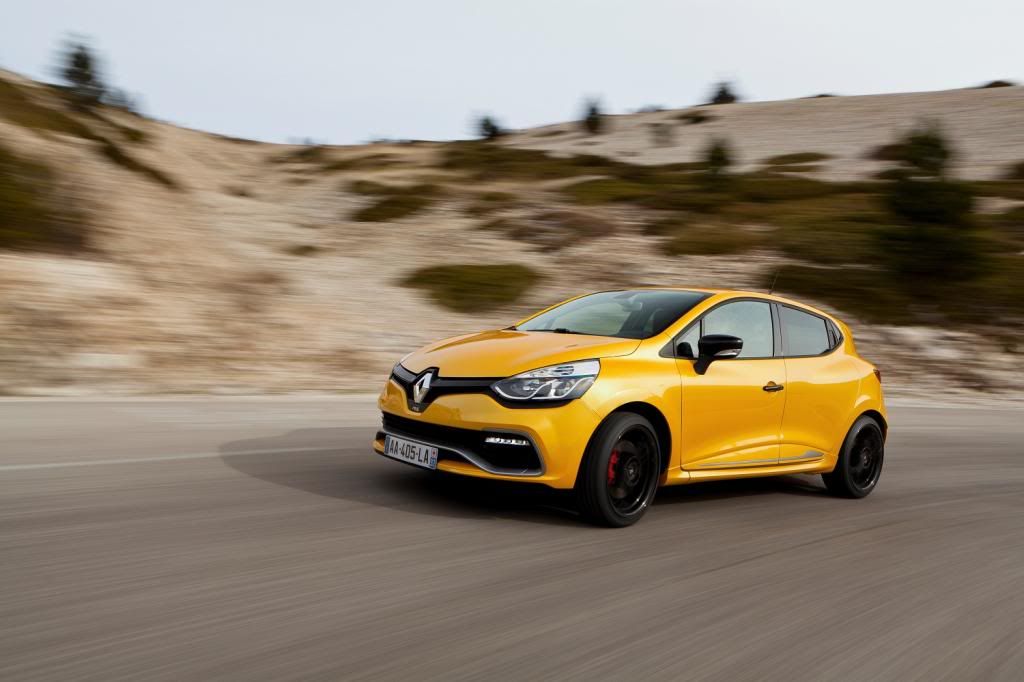
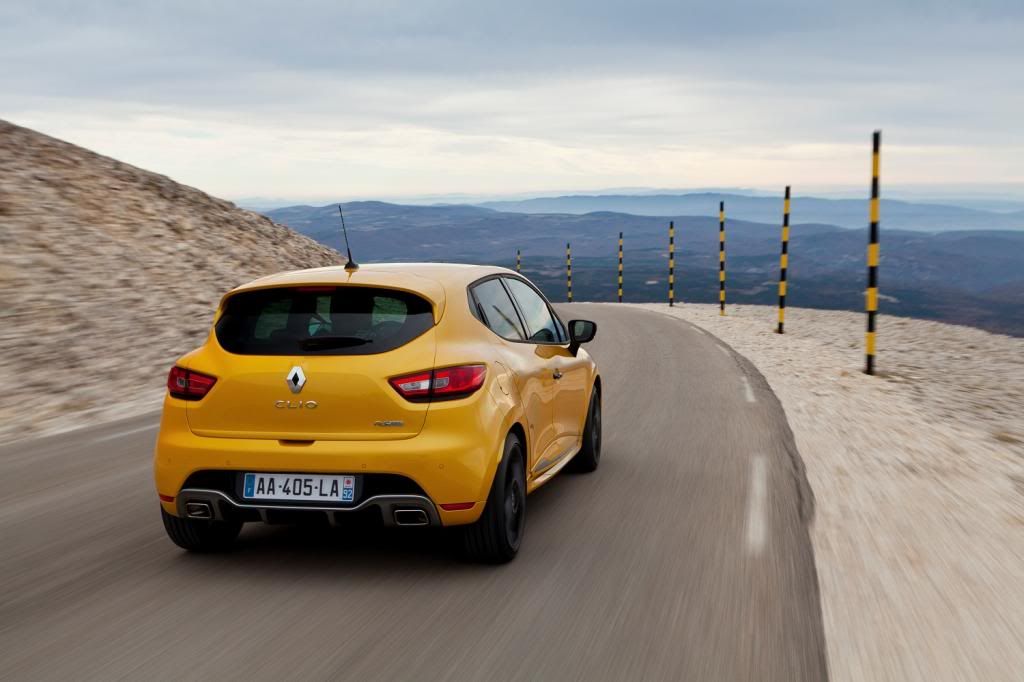
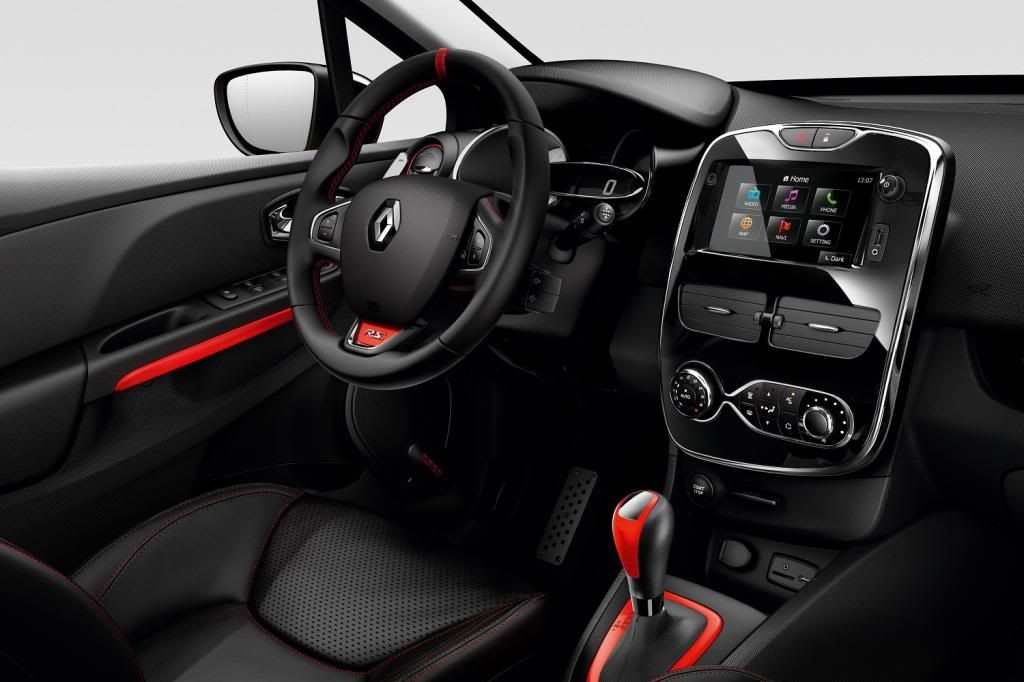
Renault Clio R.S. 200 EDC is now available to order

Following the official presentation at the Paris Motor Show on September 27, 2012, Renault now announced you can now order your own Clio RS 200 EDC in France for a starting price of 24.990 Euros ($33.400 or £21.500) with deliveries starting mid-March.
It is available with a 1.6liter turbo engine that produces 200hp and 240Nm of torque connected to a six-speed dual clutch EDC transmission with steering column-mounted gear shift paddles, and you can choose between the Sport or Cup chassis.


Monday, 4 February 2013
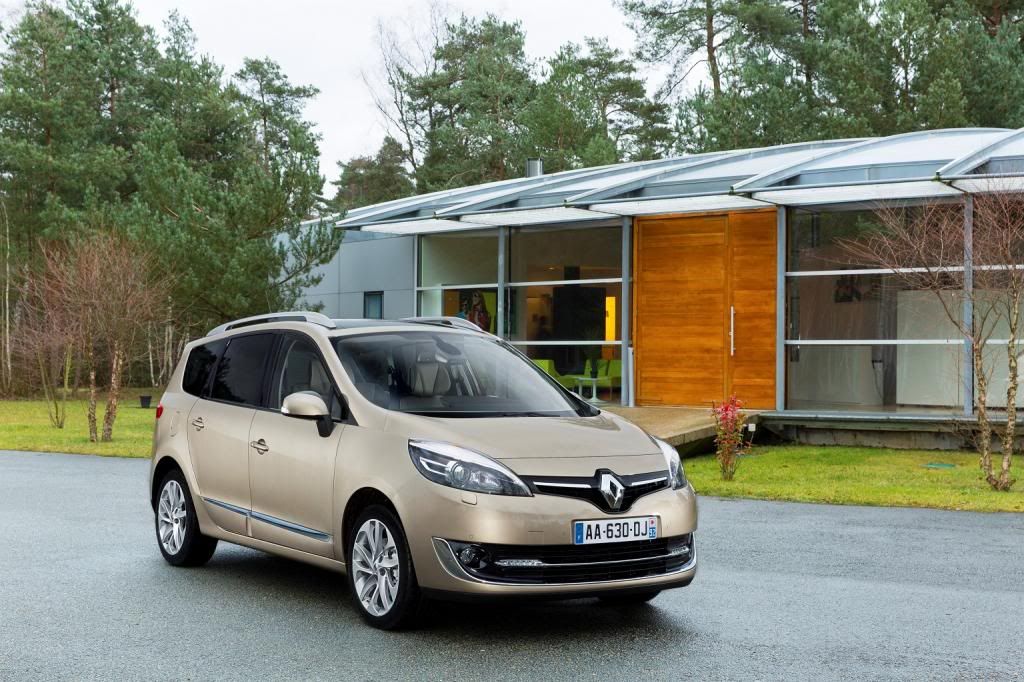
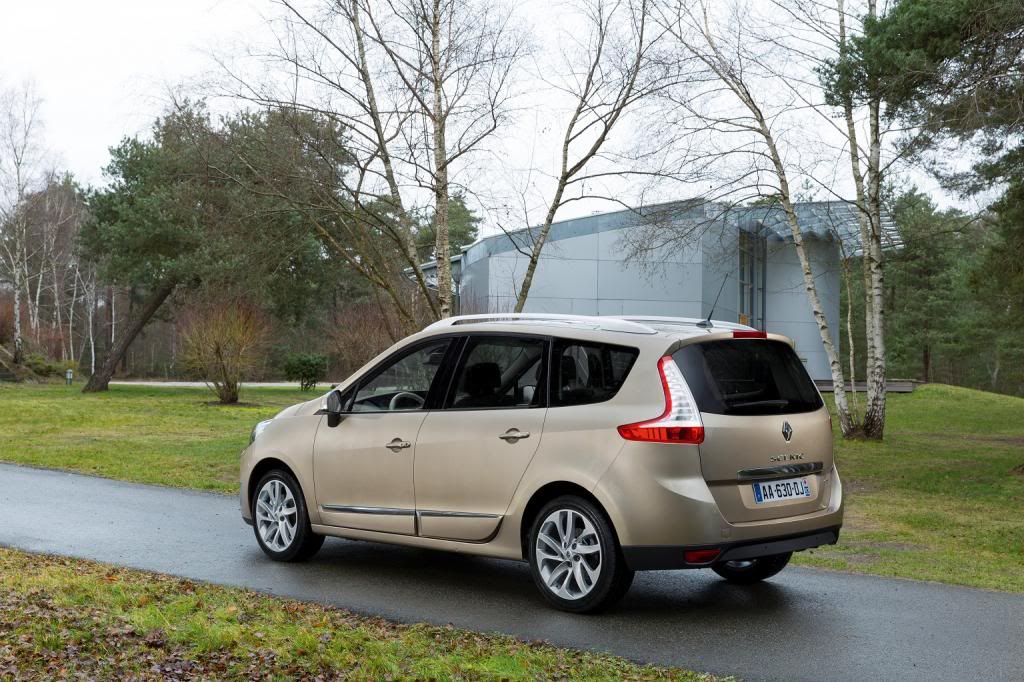
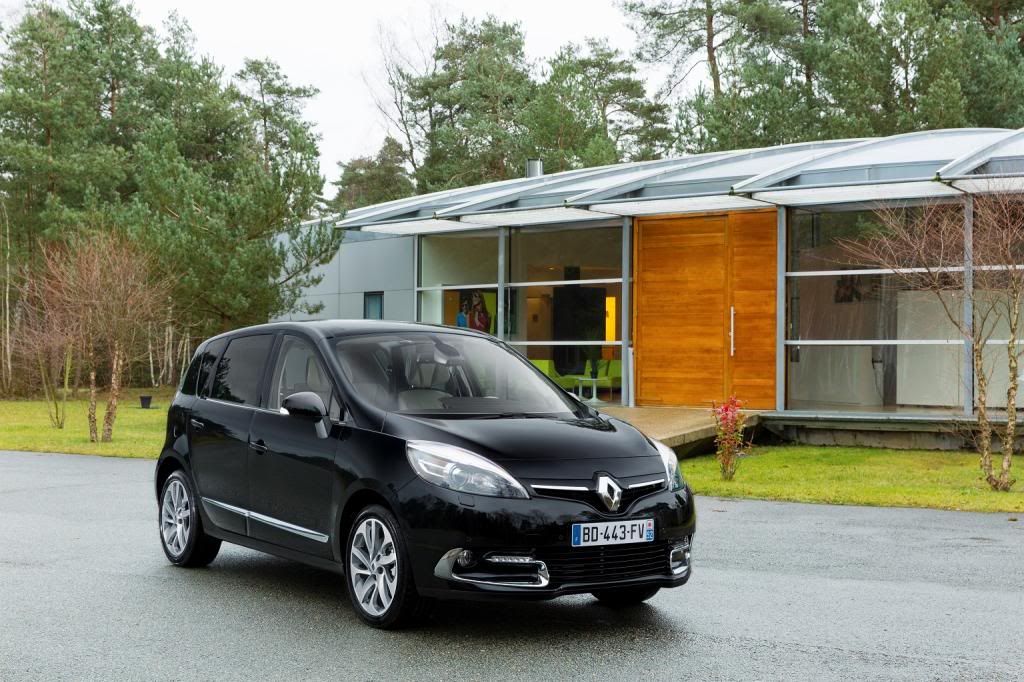
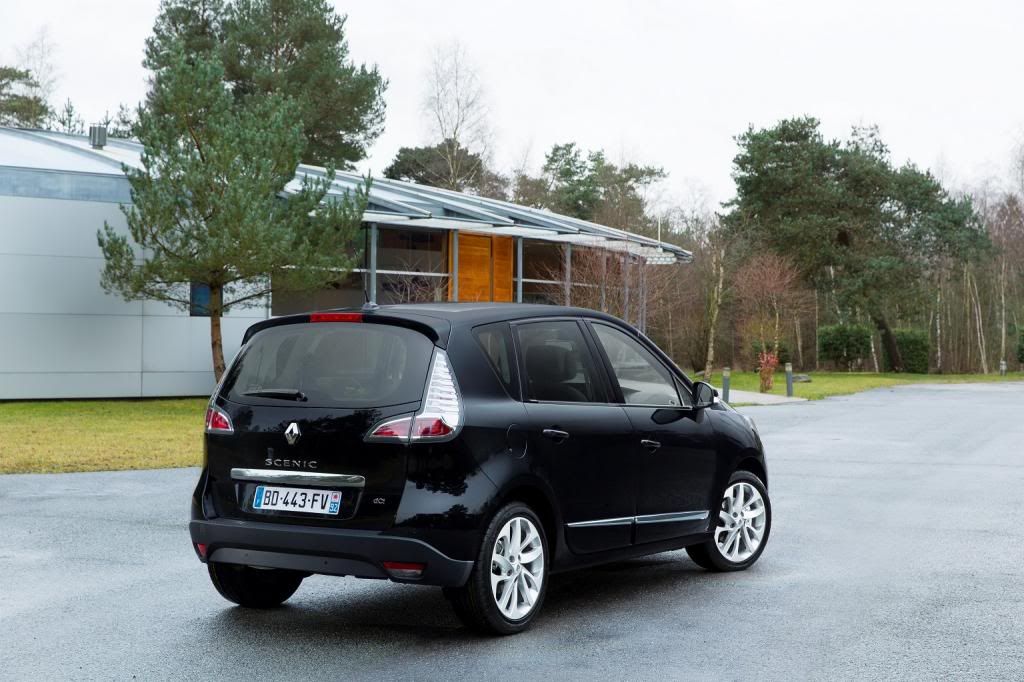
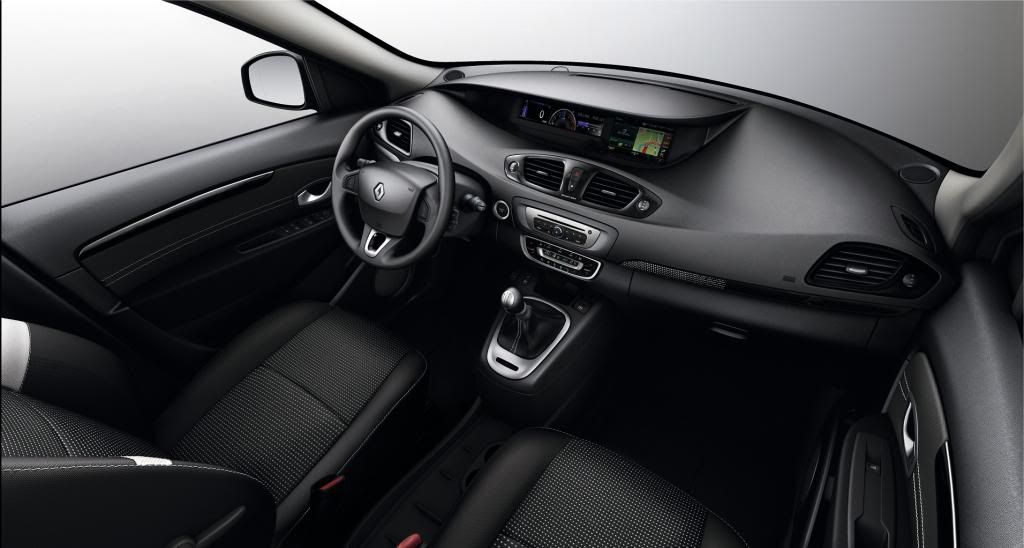
The Renault Scénic and Grand Scénic get a makeover
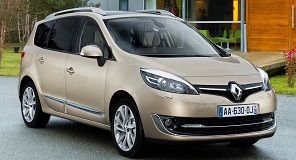
Following the presentation of the Scénic XMOD, Renault also introduced the facelift of the normal Scénic and the Grand Scénic. The new design follows the one being used in most recent models, like the Clio. On the outside we have a bigger logo, a new grille and bumpers.
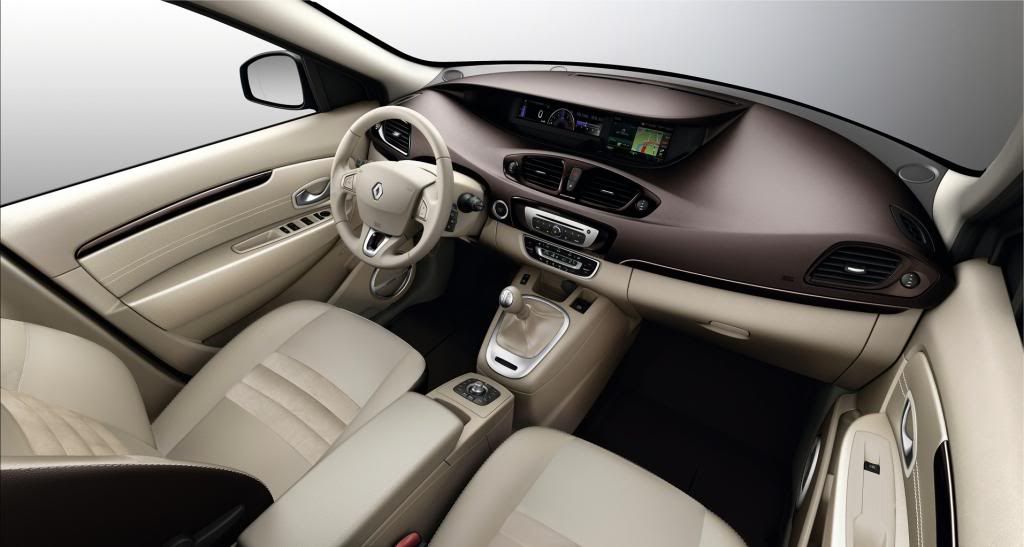
Changes are deeper than just a makeover. The dashboard now includes a new area for the navigation and multimedia system, called the R-Link. This system has an easy-to-reach joystick control plus a touchscreen display, that looking at the pictures seems really far from the driver.
Renault also introduced a new range of Energy engines, including the 1.2liter TCe 130 that promises a 15% reduction in fuel consumption and CO2 emissions.
Find out more on March 5 at the Geneva Motor Show, with sales following shortly after.